How I Help Children Develop GOOD Practice Habits 🎶
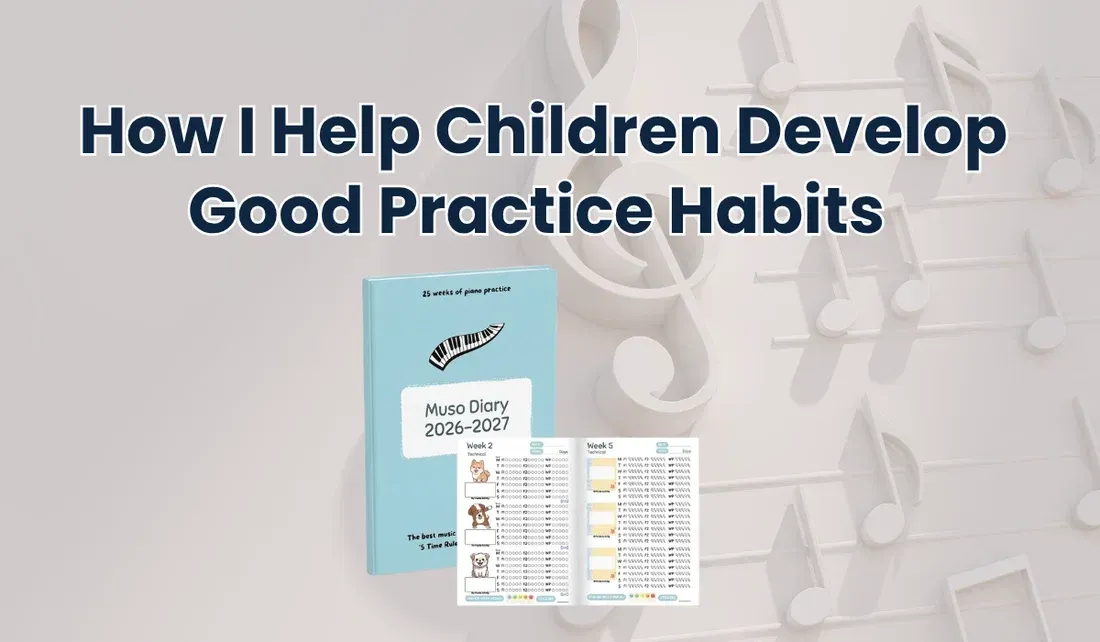
As a music educator and co-founder of Muso Method, one of the most common questions I get from parents is:“How can I help my child practice better at home?”And my answer is always the same—good practice habits are not about forcing longer hours, but about creating a system that is consistent, engaging, and easy for children to follow.That’s exactly why I created the Muso Piano Diary—to help children enjoy practice while gradually building independence.
The Muso Piano Diary transforms practice from something childrenhave to dointo something theywant to do. It provides a simple structure that both children and parents can follow together at home.
1. Track Practice Visually
Every time a child practices a piece, I encourage them to color an animal or object in the diary. It may seem simple, but this visual progress tracker gives children a sense of achievement and motivates them to keep going. For younger children, especially in primary school, I always recommend that parents stay involved and monitor their practice closely.
2. Follow the MUSO x5 Rule
To make sure practice is effective, I introduced the Muso Method x5 rule. Children practice each piece five times with the right hand, five times with the left hand, and five times with both hands together. This approach builds strong muscle memory while keeping practice structured and manageable, rather than overwhelming.
3. Weekly Sticker Rewards
At the end of each week, parents can reward their child with one or two stickers depending on how focused their practice has been. I always emphasize that it’s not just about completing practice—it’s about the quality of that practice.
4. Set Meaningful Home Rewards
To keep children motivated, I suggest that parents create simple “home prizes.” For example, collecting ten stickers could mean a family board game night or a special treat. These small rewards go a long way in helping children associate practice with positive experiences.
From my experience, a few small adjustments can make a big difference. I often recommend giving an extra sticker for consistent daily practice, and even more for sessions that are truly focused—with fewer distractions and breaks. If parents are unsure about how focused their child was, they can start by giving one sticker and then add another if the teacher confirms good progress during the next lesson. This keeps the system encouraging while still maintaining accountability.
At the end of the day, my goal is not just to help children play better, but to help them develop skills that last a lifetime—focus, discipline, and confidence. When practice becomes something children enjoy and take ownership of, progress naturally follows. And that’s when we know we’ve built a truly good practice habit. 🎶
Ready to Build Better Practice Habits? 📔
If you’re ready to help your child develop consistent, focused, and enjoyable practice routines at home, the Muso Piano Diary is the perfect place to start.
👉 Get your copy here:https://www.musomusicpublishing.com/products/pianodiary
Isabelle Ng